
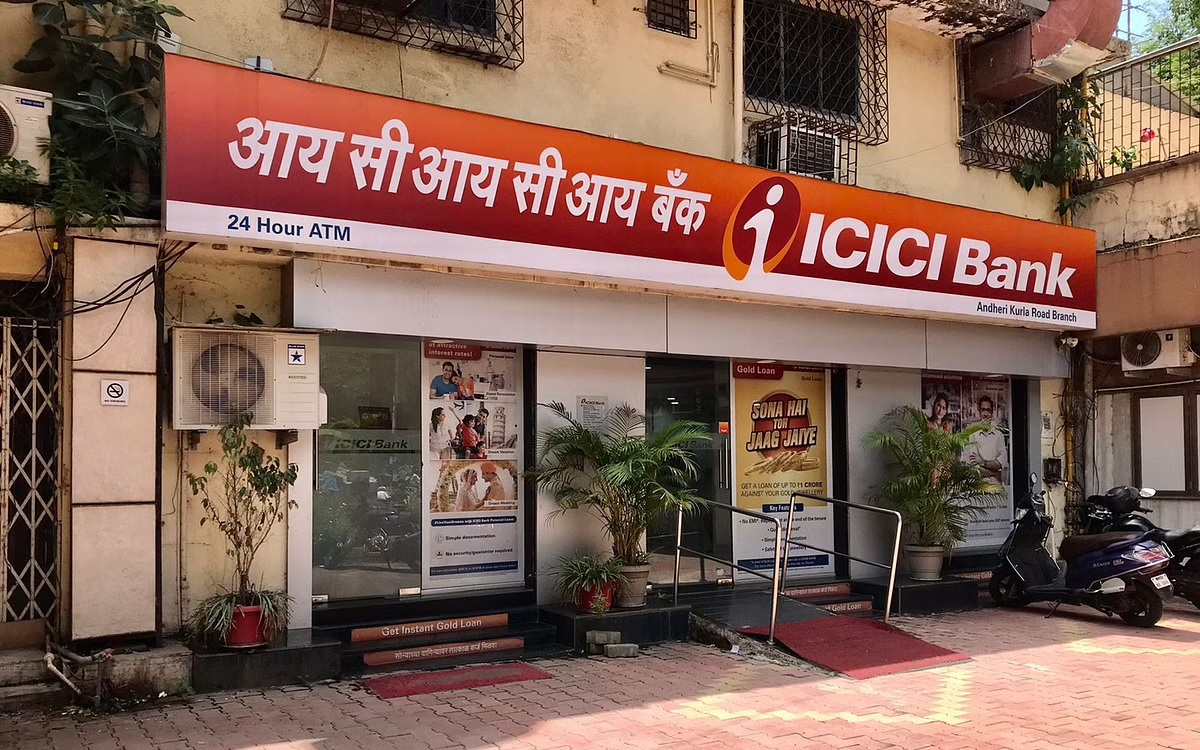
Big private sector bank, ICICI, seems to be closing its doors to the common man now. This is indicated by the recent huge increase in the average minimum balance for savings bank account holders by the bank.
ICICI Bank has dramatically increased the average minimum balance for savings bank (SB) account holders in metros and urban areas to ₹ 50,000. Till about a week ago, it was ₹ 10,000. From August 1, 2025, all new customers opening an account with ICICI will have to maintain this minimum average monthly balance (MAMB). If they do not do so, they will have to pay a penalty.
Add rightsofemployees.com as a Preferred Source




This information has been given in a report of Economic Times. According to the report, the spokesperson of ICICI Bank did not elaborate on the reasons behind such a rapid increase in the minimum balance amount. At the same time, most money managers believe that as the total GDP increases, the distribution of wealth will become unbalanced, as a result, more and more banks and financial institutions will try to gain a foothold in wealth management. Already, banks are facing tough competition from mutual funds, portfolio management service providers, private equity and venture capital funds to attract wealthy savers.
Basic savings account is the need of the common man
To strike a balance between the race to attract ‘mass affluent’ customers and the need to bring the unbanked into the institutional financial fold, the government had instructed banks to convert their ‘no-frills’ accounts into Basic Savings Bank Deposit Accounts (BSBDA) more than a decade ago. The aim was to connect the common man to the banks.
As per Reserve Bank of India (RBI) guidelines, there is no requirement of any minimum balance in BSBDA accounts, including those opened under the Pradhan Mantri Jan Dhan Yojana (PMJDY). According to the central bank’s master circular on ‘Customer Service in Banks’ issued on July 1, 2015, for accounts other than BSBDA accounts, banks may fix service charges on various services as per the policy approved by their boards, provided these charges are reasonable and not much higher than the average cost of providing those services.
Add rightsofemployees.com as a Preferred Source