
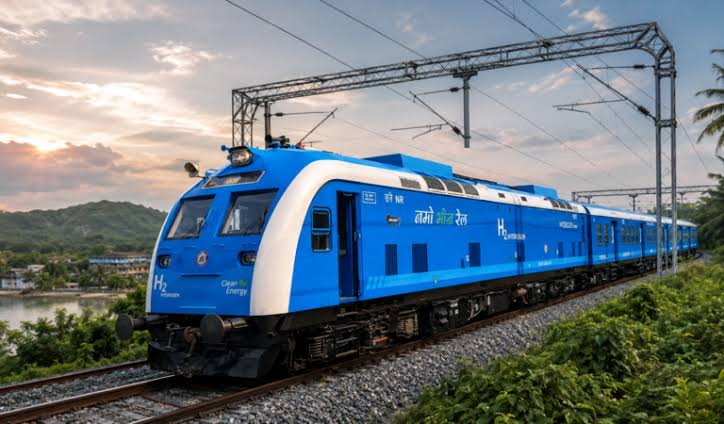
The indigenously developed hydrogen-powered train has successfully completed trial operations in Haryana, with Indian Railways preparing for the next phase of testing on the Delhi route.
India has achieved a significant milestone in clean transportation as the country’s first hydrogen-powered train successfully completed more than 1,200 kilometres of trial runs. The project has already saved over 3,200 litres of diesel, according to the Ministry of Railways.
Add rightsofemployees.com as a Preferred Source




The hydrogen train has been undergoing trial operations between Jind and Sonipat in Haryana since it was flagged off on July 17 under the Centre’s Atmanirbhar Bharat initiative. Following the successful tests, Indian Railways is preparing to begin the next phase of trials on the Delhi route.
Hydrogen fuel cells power the train
Unlike conventional diesel locomotives, the train generates electricity onboard using hydrogen fuel cell technology.
Inside the fuel cells, hydrogen reacts with oxygen to produce electrical energy, which powers the train’s traction motors. The only by-product of this process is water vapour, eliminating harmful exhaust emissions associated with diesel-powered trains.
According to the Railway Ministry, the absence of combustion means the train produces no smoke or tailpipe carbon emissions, making it one of the cleanest rail propulsion technologies available.
Developed entirely by Indian Railways
The hydrogen train has been designed and developed as an indigenous project by Indian Railways.
The train comprises:
- 10 passenger coaches
- 2 Hydrogen Driving Power Cars
- 2,400 kW total power output
Its propulsion system combines hydrogen fuel cells with lithium iron phosphate batteries and onboard hydrogen storage cylinders to ensure efficient and reliable operations.
Railways Minister Ashwini Vaishnaw described the project as a major achievement, highlighting that the technology has been developed within India.
First hydrogen refuelling facility established
As part of the project, Indian Railways has also commissioned its first dedicated hydrogen storage and refuelling facility at Jind, Haryana.
According to the ministry:
- Hydrogen is stored at pressures of up to 500 bar
- Fuel is dispensed at 350 bar
- The facility can store approximately 3,000 kilograms of hydrogen
The infrastructure has been developed to support regular operations of hydrogen-powered trains.
Multiple safety systems installed
The Railway Ministry said several advanced safety mechanisms have been integrated into the train and supporting infrastructure.
Key safety features include:
- Independent hydrogen leak detection systems
- Heat, flame and smoke sensors
- Automatic emergency shut-off systems
- Continuous ventilation systems
- Compliance with international safety standards
Officials said the train has also undergone mandatory technical validation to ensure safe operations under Indian conditions.
Delhi trials planned next
Following the successful Haryana trials, Indian Railways plans to begin testing the hydrogen train on the Delhi route.
The project forms part of India’s broader efforts to build an indigenous hydrogen ecosystem while reducing dependence on fossil fuels and promoting sustainable public transport.
Officials believe the successful trials could pave the way for the gradual introduction of hydrogen-powered trains across the country’s railway network, supporting India’s long-term clean energy and zero-emission goals.
FAQ
How far has India’s first hydrogen train travelled?
The train has completed more than 1,200 kilometres of successful trial runs between Jind and Sonipat in Haryana.
How does a hydrogen-powered train work?
The train generates electricity through hydrogen fuel cells, where hydrogen reacts with oxygen to produce electrical power. The only emission is water vapour.
How much diesel has the project saved?
According to the Ministry of Railways, the trial operations have already saved over 3,200 litres of diesel.
What is the next phase of testing?
After successful trials in Haryana, Indian Railways plans to conduct trial runs on the Delhi route before considering wider deployment.
Add rightsofemployees.com as a Preferred Source