
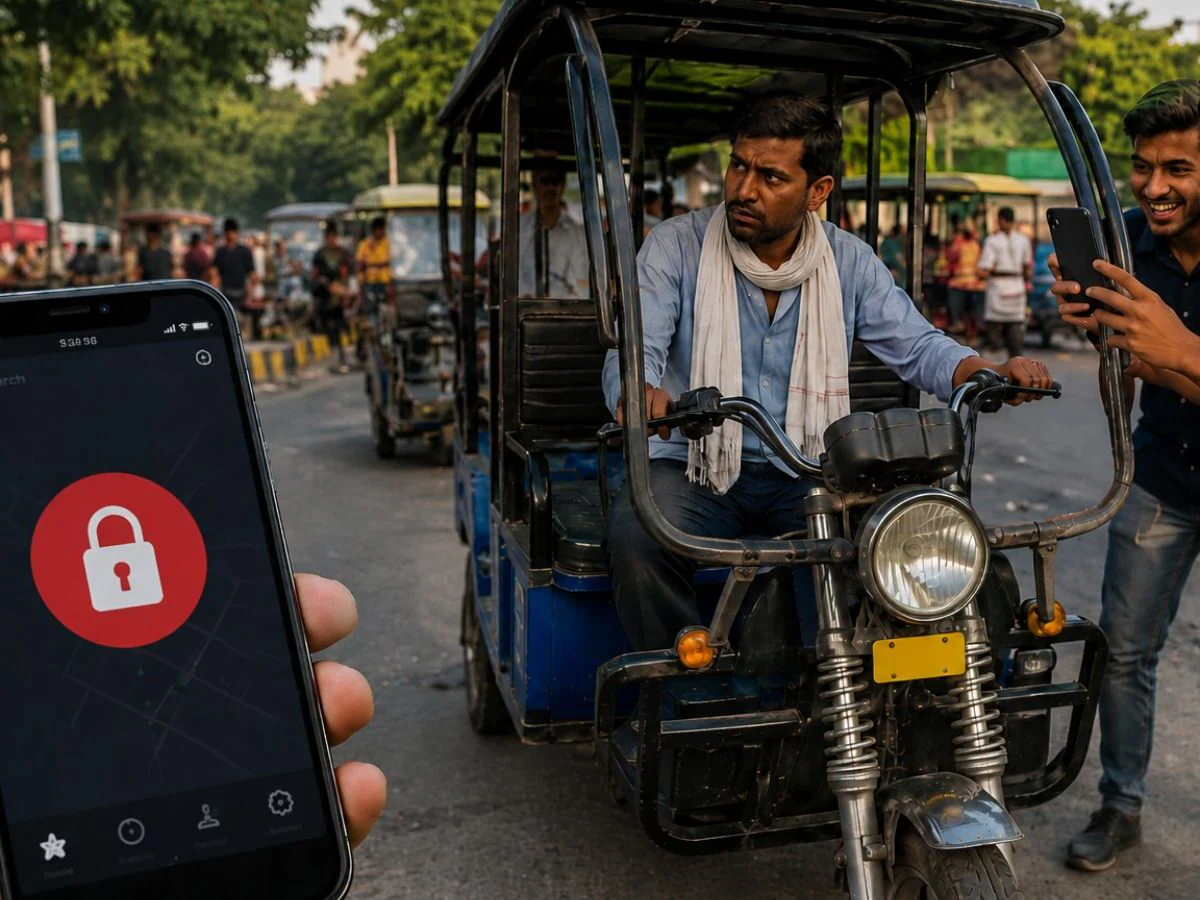
NEW DELHI — The Ministry of Electronics and Information Technology (MeitY) has ordered Google and Apple to immediately remove seven battery management applications from their respective app stores. The emergency regulatory action comes after security vulnerabilities in the software were exploited to remotely immobilize electric vehicles, primarily e-rickshaws, on public roads.
Add rightsofemployees.com as a Preferred Source




The ministry’s directives target a specific cluster of diagnostic tools—including BAT-BMS, SMART BMS, and LOSSIGY—following a surge in viral social media videos showing vehicles abruptly losing power mid-transit. The footage revealed third parties using the applications to exploit open Bluetooth connections, disabling battery discharge switches and leaving daily-wage drivers stranded in traffic.
Recent Posts
- Raksha Bandhan 2026 Date: When will Rakhi, the festival of brotherly love, be celebrated this year? Learn the exact date, auspicious time, and whether Bhadra will be observed.
- EPF Scheme 2026: Can you withdraw your entire PF balance if you quit your job within one year? Understand the full rules for eligible member balance and tax.
- Katrina Kaif and Vicky Kaushal Set Couple Goals With New Romantic Rain Picture
- MeitY Demands Explanations From Telegram and Signal Over Username-Driven Cyber Risks
- Microsoft Layoffs: Over 5,000 Global Jobs at Risk Next Week as AI Pivot Accelerates
Unsecured Bluetooth Hardware Exploited
Battery Management System (BMS) applications are standard utilities designed to monitor core parameters such as voltage, cell temperature, current, and state of charge.
However, tech ministry officials noted that a critical hardware flaw exists in certain low-cost lithium-ion battery packs popular in the budget electric vehicle market. Many of these imported battery systems lack password protection or encrypted pairing protocols. Consequently, any smartphone running a compatible BMS application within local Bluetooth range can automatically pair with the vehicle’s battery pack and assume master control over its power output.
MeitY Secretary S. Krishnan confirmed that the government had taken swift notice of the cyber-physical threat. He stated that multiple offending applications have already been successfully deplatformed and emphasized that the ministry will maintain continuous engagement with app stores to ensure public safety.
A Pivot in Digital Threats
Government representatives highlighted that while India has banned hundreds of applications since 2020, prior crackdowns primarily targeted data exfiltration, national security sovereignty, and financial lending fraud. This case represents a distinct and evolving category of threat: the exploitation of connected Internet of Things (IoT) devices to cause physical civilian disruption and economic harm.
The government has issued a stern warning that any additional applications found facilitating unauthorized remote interference with battery-operated vehicles will face identical enforcement actions. Furthermore, MeitY has formally requested that both Google and Apple strengthen their due diligence and vetting frameworks for all applications designed to interface with connected hardware devices.

Recent Posts
- Raksha Bandhan 2026 Date: When will Rakhi, the festival of brotherly love, be celebrated this year? Learn the exact date, auspicious time, and whether Bhadra will be observed.
- EPF Scheme 2026: Can you withdraw your entire PF balance if you quit your job within one year? Understand the full rules for eligible member balance and tax.
- Katrina Kaif and Vicky Kaushal Set Couple Goals With New Romantic Rain Picture
- MeitY Demands Explanations From Telegram and Signal Over Username-Driven Cyber Risks
- Microsoft Layoffs: Over 5,000 Global Jobs at Risk Next Week as AI Pivot Accelerates
Add rightsofemployees.com as a Preferred Source