
Safety in the Skies: Navigating Airline Policies and Battery Limits
-
The Cabin-Only Rule: Why Power Banks are Banned from Checked Luggage
Add rightsofemployees.com as a Preferred Source


-
Watt-Hour Limits: How to Calculate Your Device’s Capacity
-
In-Flight Use: Sharp Policy Differences Between Global Carriers
-
Storage and Safety: Preventing Thermal Runaway and Short Circuits
-
Security Confiscation: What Happens When Your Gear Doesn’t Meet Code


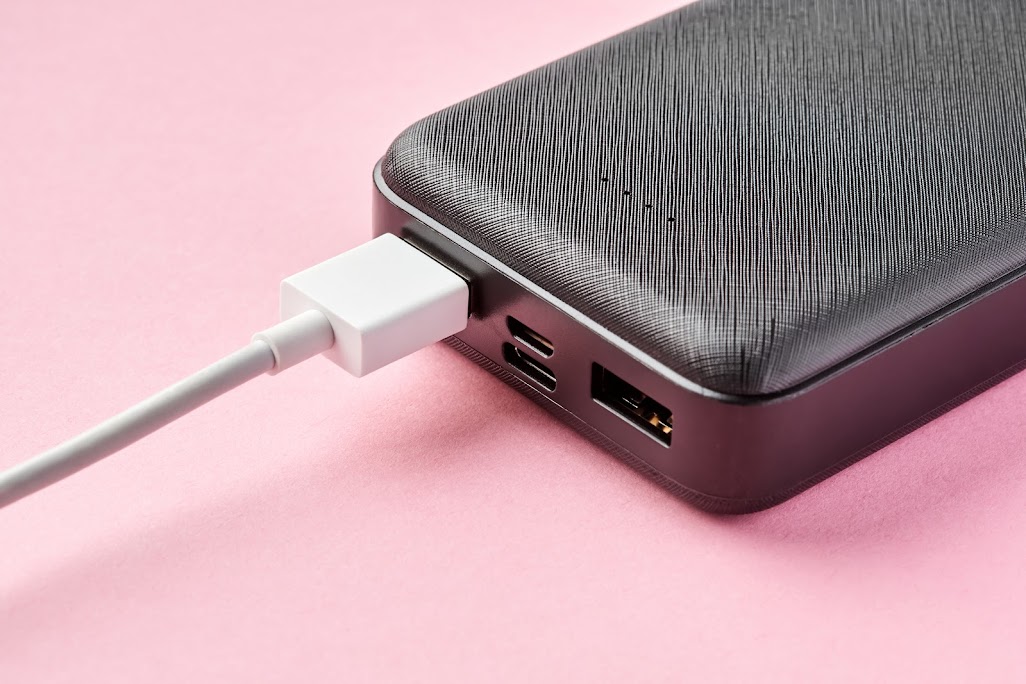
Power banks are a travel lifesaver. The thing is, they are essentially tiny boxes of volatile energy.
Also Read | Income Tax Dept Emails Flag Undisclosed Foreign Assets
Actually, aviation authorities like India’s DGCA are currently tightening the screws on how we carry them. Specifically, following several fire scares—including a recent one on an IndiGo flight—regulators are moving toward stricter enforcement.
As a result, being unaware of the rules could mean your expensive charger ends up in a security bin. Consequently, you need to treat these gadgets with the same caution as any other hazardous material (let’s be real, nobody wants a fire at 30,000 feet).
And here’s the kicker. Your phone and laptop have built-in safety circuits, but that cheap power bank might not.
Basically, the risk is “thermal runaway.” Instead of a slow battery drain, a damaged or poor-quality cell can enter a self-heating loop. In fact, it can lead to toxic fumes or an actual explosion. And then Y followed. This is why airlines are obsessed with where you pack them.
Also Read | Income Tax Dept Emails Flag Undisclosed Foreign Assets
-
Hand Baggage Only: Power banks are 100% prohibited in checked bags. Actually, if a fire starts in the cargo hold, the crew can’t reach it. Specifically, they must stay in the cabin where the crew can use fire suppressors immediately.
-
Storage Advice: Don’t shove them in the overhead bin. Basically, many airlines now mandate they stay under the seat or in the seat pocket for faster access if they start smoking (those too).
-
Terminal Protection: Keep the ports covered or use a dedicated pouch. Actually, contact with keys or coins can cause a short circuit.
Moreover, the math matters. Specifically, security doesn’t look at “mAh”—they look at “Watt-hours” (Wh).
Also Read | Income Tax Dept Emails Flag Undisclosed Foreign Assets
Actually, the limit for most airlines is 100 Wh. As a result, if your device doesn’t have the rating clearly printed on it, it will likely be confiscated. Consequently, if your bank only shows mAh, you’ll need to do the math yourself to prove it’s legal (I checked this twice).
Example: A standard 20,000 mAh bank at 3.7V is $74 Wh$—well within the limit.
The thing is, usage rules are now split by region. In fact, carriers like Emirates and Flydubai have completely banned the use of power banks during flights as of late 2025.
Basically, you can carry them, but you can’t charge your phone with them while in the air. Instead of a tidy wrap-up, just be prepared for different rules if you’re flying to the US versus the Middle East. And then Y followed. If you’re caught using one on a restricted flight, the crew might have to confiscate it for the duration of the journey…

Also Read | Income Tax Dept Emails Flag Undisclosed Foreign Assets
Add rightsofemployees.com as a Preferred Source