
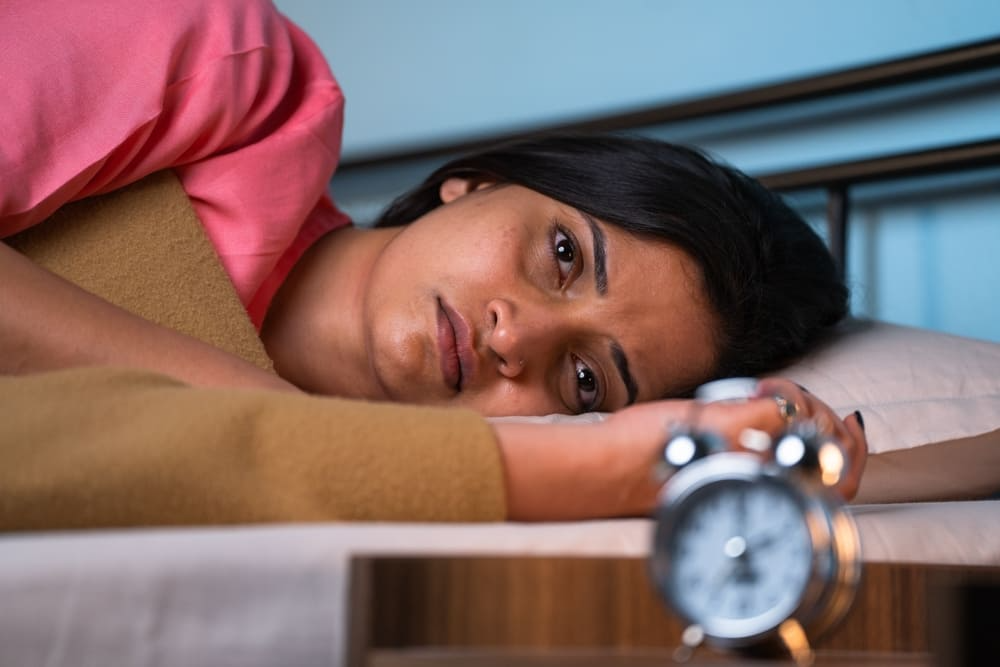
Longitudinal data presented at SLEEP 2026 identifies a distinct, high-risk physical profile driven by persistent nervous system hyperarousal.
For millions of working adults, the daily routine involves a frustrating contradiction: feeling entirely drained and heavy-eyed throughout the workday, only to lie wide awake in bed for an hour waiting for sleep to arrive. While many shrug this off as standard stress, a groundbreaking longitudinal study reveals that this specific combination is a major threat to cardiovascular health.
Add rightsofemployees.com as a Preferred Source




According to research from the Penn State Adult Cohort presented on June 17 at the SLEEP 2026 international conference, individuals who suffer from both Excessive Daytime Sleepiness (EDS) and prolonged sleep-onset latency (taking 30 minutes or longer to fall asleep) face more than triple the risk of developing chronic hypertension.
The findings highlight that while daytime fatigue alone signals a health issue, the structural pairing of daytime sluggishness and nighttime sleep delay exposes an especially vulnerable biological subgroup.
Recent Posts
- The Hourly Reset: A 5-Minute Walk Reverses the Harmful Effects of Prolonged Sitting, New Study Confirms
- Maharashtra TET 2026 Exam Postponed Following Paper Leak in Thane
- Empowering Your Vote: The Complete Guide to Applying for and Verifying Your Voter ID Card Online
- Weekend Special: How to Download Your Birth or Marriage Certificate Online in Minutes
- OnePlus N6 to launch in India on June 30, price and features spark excitement
Breaking Down the Statistical Risk Profiles
The analysis drew from an extensive population-based study of more than 1,700 adults monitored over an average follow-up period of 7.5 years. To ensure precise data points, all participants underwent objective overnight tracking using polysomnography (sleep lab monitoring) rather than relying exclusively on personal sleep diaries.
When tracking patients who started the study with perfectly normal blood pressure, researchers noted a stark escalation in risk based on their sleep profiles:
Physiological Hyperarousal: Why the Body Stays Stressed
The biological driver behind this dramatic risk multiplier comes down to a state of chronic, unyielding internal stress.
“These results likely reflect a state of physiological and emotional hyperarousal,” explained study investigator Alexandros N. Vgontzas, MD, professor of psychiatry and behavioral health at the Penn State College of Medicine. “The greatest risk for high blood pressure is concentrated among those whose internal stress systems remain highly active despite intense feelings of daytime exhaustion.”
In patients exhibiting this combined profile, clinical testing shows an overactivation of the body’s primary stress pathways, specifically the hypothalamic-pituitary-adrenal (HPA) axis. This maladaptive state forces the body to pump out elevated levels of cortisol and adrenaline into the bloodstream continuously. Because the nervous system fails to switch off and transition into a restorative parasympathetic state, resting blood pressure levels remain elevated through the night, gradually damaging arterial walls over time.
The Biological Hyperarousal Loop:
[Daytime Exhaustion / Chronic Fatigue]
               │
               ▼
[Nighttime Sleep Initiation Failure (30+ Minutes)]
               │
               ▼
[Elevated Cortisol & Active HPA Axis Stress Pathways]
               │
               ▼
[Arterial Strain & Sympathetic Nervous System Overdrive]
               │
               ▼
[Triple Risk of Newly Developed Hypertension]
Shifting the Clinical Approach to Patient Care
Historically, when a patient complained of chronic tiredness, general practitioners almost exclusively screened for Obstructive Sleep Apnea (OSA). While sleep apnea remains a critical cardiovascular hazard, Dr. Vgontzas emphasizes that medical professionals must widen their diagnostic lens.
The data revealed that individuals trapped in this combined sleep profile were also significantly more likely to struggle with undiagnosed clinical depression and chronic insomnia. Sleep specialists not involved in the study agree that treating cardiovascular conditions requires evaluating the heart and brain as a single system. Because sleep is deeply cardiopulmonary, a heart cannot fully recover if the nervous system denies it a drop in resting heart rate and blood pressure at night.
Medical experts recommend that patients showing signs of this high-risk profile pursue targeted, multi-faceted interventions. This includes practicing Cognitive Behavioral Therapy for Insomnia (CBT-I) to lower neurological hyperarousal, managing underlying mental health strains, and utilizing targeted medical therapies to shorten sleep-onset latency and improve deep-sleep architectures.
FAQ
Why is taking more than 30 minutes to fall asleep considered a specific medical warning sign?
In sleep medicine, taking 30 minutes or longer to transition from full wakefulness to light sleep is the clinical benchmark for prolonged sleep-onset latency. It serves as a direct indicator of insomnia and internal hyperarousal, meaning the brain’s “fight-or-flight” mechanisms are actively blocking the neurological pathways required to initiate rest.
Can lifestyle changes alone fix the physiological hyperarousal causing this issue?
For mild cases, strict sleep hygiene protocols—such as removing bright blue screens 60 minutes before bed, banning caffeine afternoon hours, and keeping a rigid wake-up schedule—can quiet an overactive nervous system. However, since this profile involves deeply rooted hormonal stress responses, more structured approaches like Cognitive Behavioral Therapy for Insomnia (CBT-I) are frequently required.
Does taking prescription sleeping pills eliminate the increased risk of high blood pressure?
Not necessarily. While some sedative medications force the brain into sedation, they do not always mirror natural sleep architectures or effectively reduce the systemic cortisol spikes associated with HPA-axis dysfunction. It is essential to work alongside a doctor to treat the root cause of the sleep disruption rather than relying solely on symptom suppression.
At what point should high blood pressure readings be evaluated for underlying sleep conditions?
If a patient is diagnosed with clinical hypertension (blood pressure consistently at or above 140/90 mm Hg) and struggles to control it despite standard lifestyle adjustments or multiple medications, a comprehensive overnight sleep study is highly recommended to screen for underlying sleep apnea or hyperarousal-driven insomnia.

Recent Posts
- The Hourly Reset: A 5-Minute Walk Reverses the Harmful Effects of Prolonged Sitting, New Study Confirms
- Maharashtra TET 2026 Exam Postponed Following Paper Leak in Thane
- Empowering Your Vote: The Complete Guide to Applying for and Verifying Your Voter ID Card Online
- Weekend Special: How to Download Your Birth or Marriage Certificate Online in Minutes
- OnePlus N6 to launch in India on June 30, price and features spark excitement
Add rightsofemployees.com as a Preferred Source