

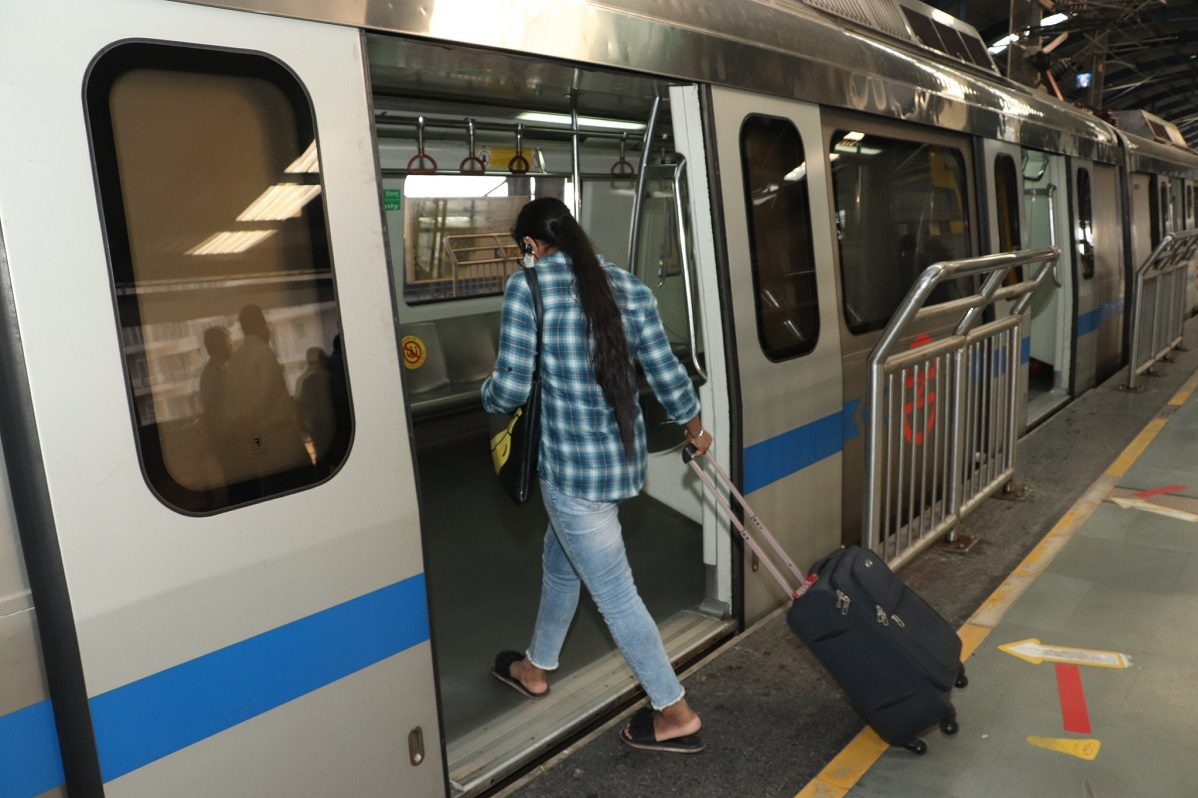
This system introduced by DMRC has been designed in such a way that when the metro train doors are closing, if any object – such as a bag, dupatta, sari, belt or cloth – gets stuck between the doors, then this system will immediately recognize it.
There is a news of relief for those traveling in Delhi Metro. It is often seen that while boarding or deboarding in a crowded manner, women’s dupattas, sarees, bag straps or other belongings of passengers get stuck in the doors of the metro. Sometimes these minor incidents turn into serious accidents. To avoid these dangers, Delhi Metro Rail Corporation (DMRC) has now come up with a new and modern safety feature – Anti-drag system.
Add rightsofemployees.com as a Preferred Source


What is anti-drag system?
This system introduced by DMRC has been designed in such a way that when the metro train doors are closing, if any object—such as a bag, dupatta, sari, belt or cloth—is stuck between the doors, then this system will immediately recognize it. As soon as the system senses the pressure of any object stuck between the doors, it will activate the emergency brake. That is, the train will not move forward until that object is removed from the door.
Where is the testing taking place?
DMRC has currently started trial of this facility in one train. In the coming time, this system will be installed in four more trains. Detailed analysis and feedback will be taken of the performance of these trains. If it is successful, then it will be implemented in other metro routes and trains as well.
How will security increase?
According to DMRC Managing Director Vikas Kumar, this technology is especially important for the old metro lines, where the facility of platform screen door (PSD) is not available at every station. Whereas PSD has been installed on the new Pink and Magenta lines and the routes of the fourth phase expansion, due to which incidents of luggage getting stuck in the doors are naturally avoided.
How sensitive will this technology be?
Till now the metro doors could detect only obstructions up to 15 mm. That is, if any object between the doors was thinner than 15 mm, then the doors could not catch it and the train would move. But now this sensitivity is being increased to 7 mm, due to which thin layers of clothes, dupatta, sari pallu, bag straps etc. will also be easily caught and the door or the train will stop.
Passengers are getting direct benefit
This facility is going to be of great benefit to women passengers in particular. It has been seen many times that women’s clothes or dupattas get stuck in the doors and incidents like dragging happen while the train is moving. Now the possibility of such incidents will almost end. DMRC already alerts passengers through announcements inside the metro that they should take special care of their clothes and belongings while boarding or alighting.
By when will this system be installed in all trains?
According to DMRC, trials will be conducted on these trains for the next one to two years. If the technology meets all the standards, it will be implemented on all the old metro lines. However, such technology will not be required in the new lines as they have platform screen doors.
Add rightsofemployees.com as a Preferred Source