
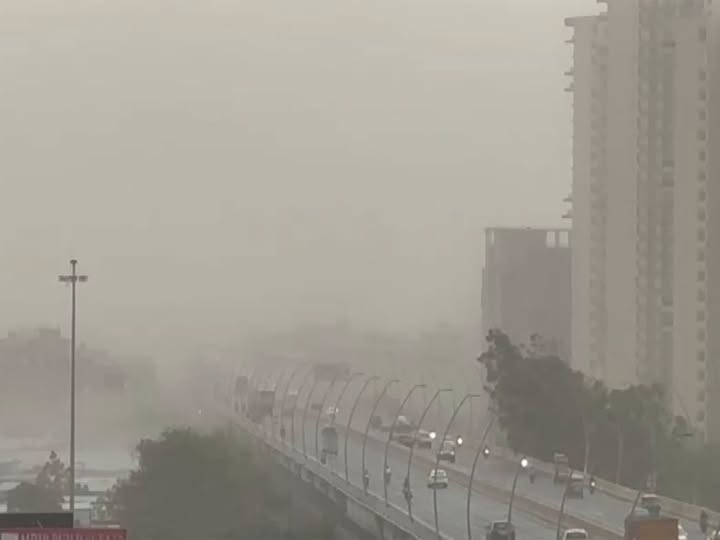
Packing gusty winds up to 80 kmph, the sudden afternoon storm drastically cut visibility across Gurugram, Noida, and Delhi, forcing a sharp plunge in regional air quality metrics.
A severe afternoon dust storm swept across Haryana’s Gurugram before barreling directly into the national capital and expanding into Uttar Pradesh’s Noida sector on Tuesday. The extreme weather event prompted the India Meteorological Department (IMD) to issue an emergency red alert for multiple sections of Delhi-NCR, warning of violent thunderstorm developments, frequent lightning strikes, and high-velocity wind speeds.
Add rightsofemployees.com as a Preferred Source




Recent Posts
- Tech Giant Oracle Cuts 21,000 Jobs Globally While Accelerating AI Spending
- LPG Price Today: Domestic and commercial cylinder rates remain unchanged; when will gas cylinders become cheaper?
- EPF Interest Credit: PF account holders will soon get 8.25% interest, know when the money will come and how to check.
- Lucknow Fire Horror: 15 Dead as Massive Blaze Engulfs Aliganj Animation Coaching Centre
- Indian Railways Penalties Hiked: Full List of Revised Fines and Jail Terms Under the Railway Act
Social media networks were flooded with video clips showing massive walls of rolling dust swallowing high-rise complexes in Gurugram, severely dropping transit visibility and disrupting daily routines during peak mid-day hours.
                          [Delhi-NCR Severe Weather Incident Map]
                                             │
         ┌───────────────────────────────────┼───────────────────────────────────┐
         ▼                                   ▼                                   ▼
 [IMD Red Alert Zone]              [IMD Orange Alert Zone]             [IMD Yellow Alert Zone]
  • Southwest Delhi Districts.      • Noida & Ghaziabad (U.P.).         • Gurugram (Haryana Hub).
  • West, South & North Districts.  • Central & Shahdara Districts.     • Unstable local gust lines.
  • Wind Speeds: 50–80 Kmph.        • Moderate rainfall buffers.        • Lingering dust suspension.
Sudden Air Quality Drop and GRAP Directives
The onset of high-speed dry winds completely reversed the favorable atmospheric scrubbing the capital had experienced over the weekend. Delhi’s 24-hour average Air Quality Index (AQI) collapsed by more than 100 points within a single diurnal cycle, entering the “poor” category for the first time in nearly a month.
[Sunday Air Quality Level] ──► Solid "Moderate" Baseline Documented at 127 AQI Points
                                                │
                                                ▼
[Monday Post-Storm Surge]  ──► Plummeted 101 Points Overnight to Touch a Dangerous 228 AQI
Despite the sudden surge in particulate matter, the Commission for Air Quality Management (CAQM) decided against activating Stage I of the Graded Response Action Plan (GRAP). The regulatory body noted that external meteorological models indicate the spike is temporary, expecting the regional air profile to stabilize back into the “moderate” category over the coming days as rain suppresses dust particles.
Detailed Regional Forecast and Impact Parameters
Amateur meteorologist Navdeep Dahiya noted that a concentrated, heavy spell of rain and thunderstorm activity was localized between 3:00 PM and 4:30 PM across the core NCR grid, leaving surface conditions largely dry after 5:00 PM.
The IMD’s official bulletin highlighted that the convective system impacts areas well beyond the immediate capital limits:
| State Territory | Specific Geographic Clusters Impacted | Peak Alert Categorization | Expected Meteorological Conditions |
| Delhi UT | Southwest, West, North, South, and Southeast districts. | RED ALERT | Severe dust storms, immediate lightning risks, and wind speeds up to 80 kmph. |
| Haryana | Sonipat, Rohtak, Jhajjar, Farukhnagar, Sohna, Rewari, and Palwal. | Yellow to Orange | Squall-line winds, light to moderate showers, and shifting visibility. |
| Uttar Pradesh | Noida, Ghaziabad, Baghpat, Khekra, Pilkhuwa, and Sikandrabad. | ORANGE ALERT | Thunderstorms accompanied by sudden moderate downpours. |
| Rajasthan | Bhiwadi, Tijara, Alwar, Deeg, and Laxmangarh tracking paths. | Regional Warning | Dry tracking dust squalls followed by minor atmospheric cooling. |
Experts attribute this sudden shift to dry winds blowing directly over northern plains corridors, picking up loose soil and mixing with localized pre-monsoon cloud systems.
FAQ
Q1: Which specific areas of Delhi-NCR were placed under the strictest IMD Red Alert?
The IMD placed the Southwest, West, North, South, and Southeast districts of Delhi under a direct red alert tracking framework, while adjacent zones like Noida and Ghaziabad were maintained under an orange-colored weather warning.
Q2: How severely did the dust storm impact Delhi’s Air Quality Index (AQI)?
The storm caused a severe 101-point drop in air quality within 24 hours. Delhi’s average AQI plunged from a clean 127 on Sunday to 228 on Monday, marking the city’s first transition into the “poor” pollution category since late May.
Q3: Will the government implement immediate GRAP restrictions due to the pollution spike?
No. The Commission for Air Quality Management (CAQM) formally decided against enacting Stage I of the Graded Response Action Plan (GRAP). Their decision was based on current forecast patterns showing that upcoming rains will likely clear out suspended dust particles.

Recent Posts
- Tech Giant Oracle Cuts 21,000 Jobs Globally While Accelerating AI Spending
- LPG Price Today: Domestic and commercial cylinder rates remain unchanged; when will gas cylinders become cheaper?
- EPF Interest Credit: PF account holders will soon get 8.25% interest, know when the money will come and how to check.
- Lucknow Fire Horror: 15 Dead as Massive Blaze Engulfs Aliganj Animation Coaching Centre
- Indian Railways Penalties Hiked: Full List of Revised Fines and Jail Terms Under the Railway Act
Add rightsofemployees.com as a Preferred Source