

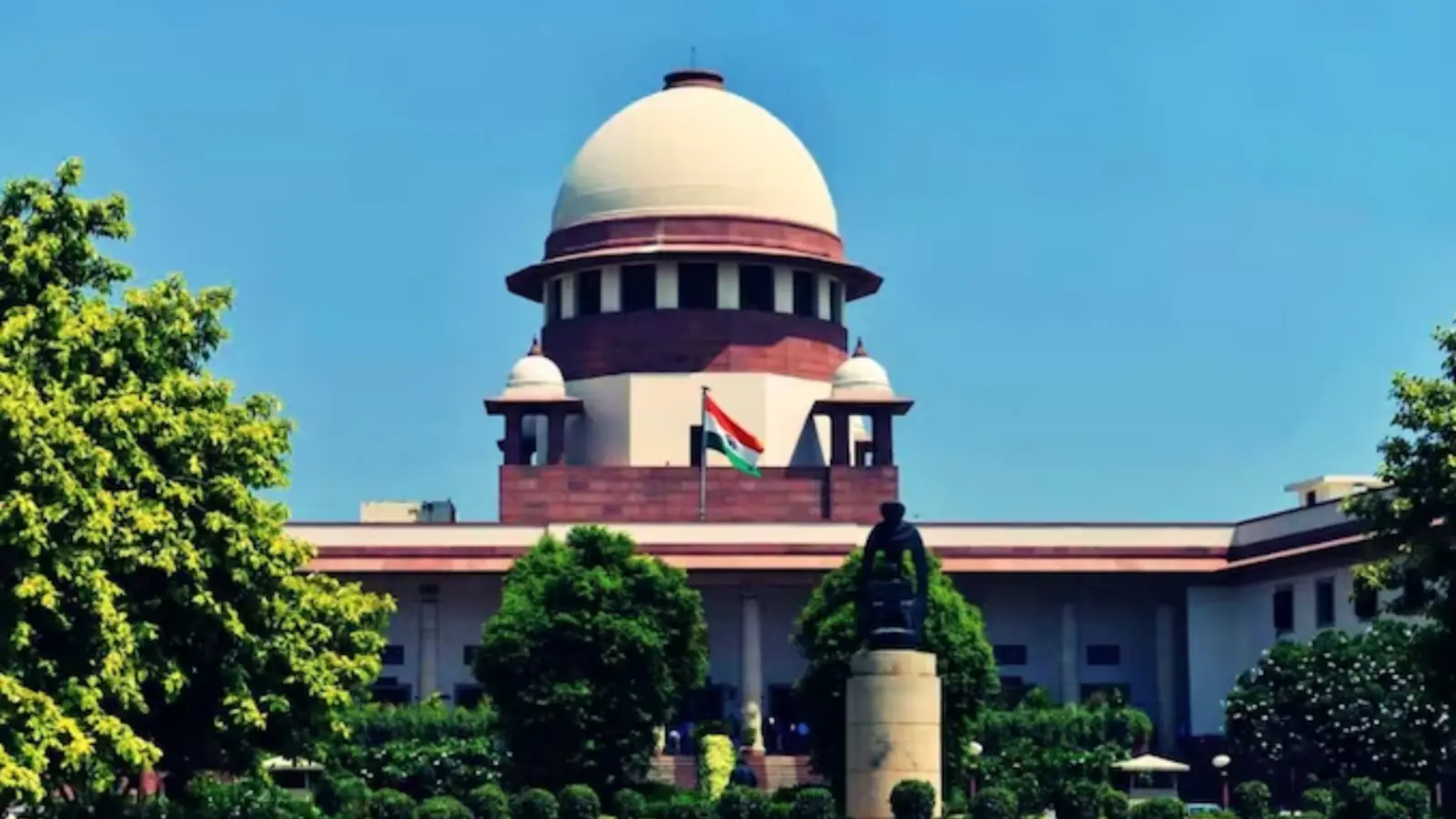
In a major legal breakthrough for women’s rights, the Supreme Court of India ruled on January 13, 2026, that a widowed daughter-in-law is entitled to maintenance from her deceased father-in-law’s estate.
Add rightsofemployees.com as a Preferred Source


Crucially, the Court clarified that it does not matter whether she became a widow before or after the father-in-law’s death. This judgment (Case: Kanchana Rai v. Geeta Sharma) ends years of technical ambiguity regarding the “timing” of widowhood.
Also Read | Aadhaar & PAN Name Change After Marriage: Complete Guide for 202656
The Law: Section 19 vs. Section 22
The Bench, comprising Justice Pankaj Mithal and Justice S.V.N. Bhatti, clarified the distinct roles of these two sections of the Hindu Adoptions and Maintenance Act, 1956:
| Section | Timeline | Legal Obligation |
| Section 19 | Father-in-law is Alive | Casts a personal obligation on the father-in-law to maintain the widow. |
| Section 22 | Father-in-law is Deceased | Casts an obligation on the heirs who inherit the father-in-law’s estate. |
Key Ruling: A daughter-in-law qualifies as a “dependant” under Section 21(vii) as “any widow of the son.” The Court noted that the law intentionally omits the word “predeceased,” meaning all widowed daughters-in-law are included.
Also Read | Aadhaar & PAN Name Change After Marriage: Complete Guide for 2026
3 Reasons Why the Supreme Court Sided with Widows
-
Arbitrary Classification: The Court rejected the idea that widows should be treated differently based on when their husbands died. Whether the husband died before the father-in-law or after him, the woman’s vulnerability remains the same.
-
Right to Dignity (Article 21): Denying support on technical grounds would lead to “destitution and social marginalization,” violating the fundamental right to live with dignity.
-
Moral vs. Legal Duty: Citing the Manusmriti, the Court noted that “no mother, father, wife, or son deserves to be forsaken.” It ruled that what was once a pious moral obligation is now a compulsory legal one under the Act.
Who is Eligible to Claim?
A widowed daughter-in-law can claim maintenance from the estate heirs only if:
-
She is unable to maintain herself from her own earnings or property.
-
She cannot obtain maintenance from her late husband’s estate.
-
She cannot obtain maintenance from her own children (son/daughter) or their estates.
-
Condition: The right to claim ends immediately if she remarries….


Also Read | Aadhaar & PAN Name Change After Marriage: Complete Guide for 2026
Add rightsofemployees.com as a Preferred Source