
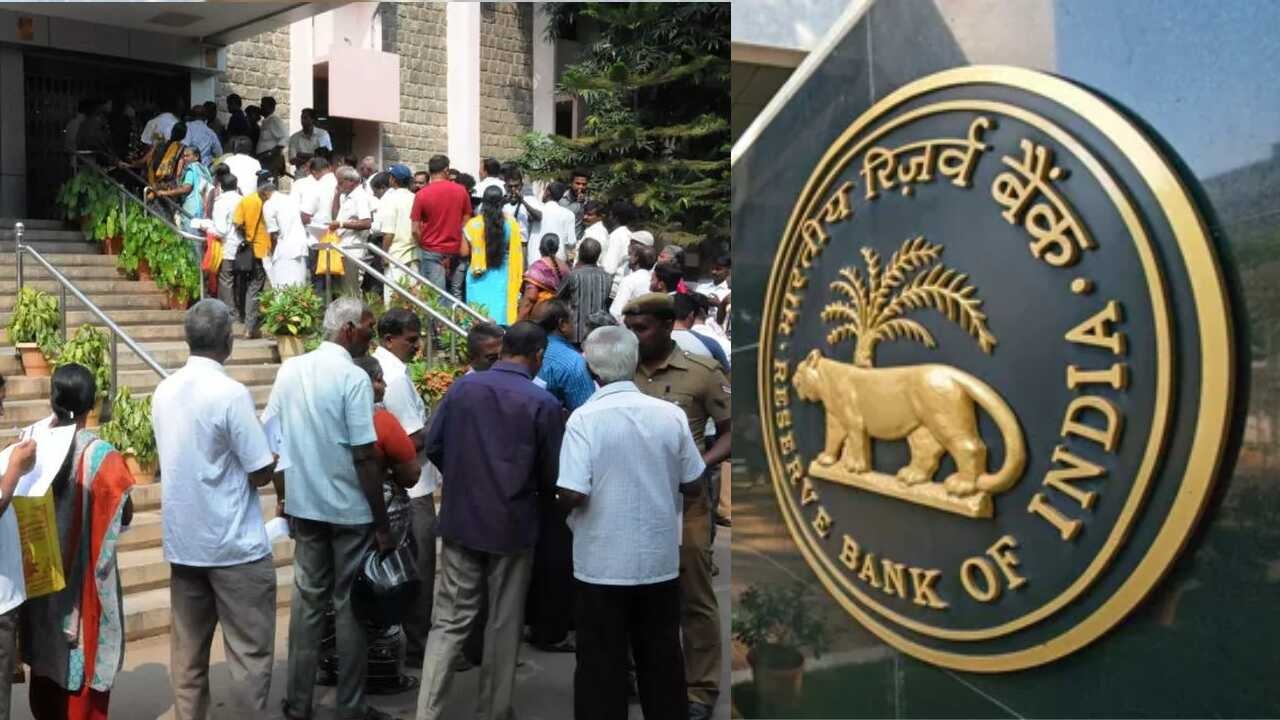
The Reserve Bank of India (RBI) has cancelled the licence of Karnataka-based Karwar Urban Co-operative Bank. 92.9 per cent of the bank’s customers are entitled to receive the full amount of their deposits from the Deposit Insurance and Credit Guarantee Corporation (DICCC).
The Reserve Bank of India (RBI) has cancelled the license of Karnataka-based Karwar Urban Co-operative Bank as it does not have adequate capital and earning prospects. With this, the bank will stop banking activity from the close of business on 23 July 2025. At the same time, the Central Reserve Bank said in the statement that the Registrar of Cooperative Societies, Karnataka has also been requested to issue an order to close the bank and appoint a liquidator for the bank.
Add rightsofemployees.com as a Preferred Source


What will happen to the customers?
On liquidation, every depositor will be entitled to receive the deposit insurance claim amount of his deposits up to a limit of Rs 5 lakh from the Deposit Insurance and Credit Guarantee Corporation (DICGC). RBI said that as per the data submitted by the bank, 92.9 per cent of the depositors are entitled to receive the full amount of their deposits from DICGC. Let us tell you that DICGC has paid Rs 37.79 crore out of the total insured deposits till June 30, 2025. RBI said that the cooperative society does not have adequate capital and earning prospects.
Advice given to urban co-operative banks
Let us tell you that recently Reserve Bank of India Deputy Governor Swaminathan J. asked the directors of Urban Cooperative Banks (UCBs) to focus on improving functioning and risk management and adopting safe technology. He said, “The working operations of banks should be even better. Understand and manage risks better. Technology should be adopted thoughtfully and safely. Most importantly, the trust of your depositors should be unwavering.”
Swaminathan said urban cooperative banks represent a model that is based not just on profits, but on purpose. The deputy governor said this reflects the essence of the cooperative model which is based on banking relationships, local knowledge and grassroots engagement.
Add rightsofemployees.com as a Preferred Source