

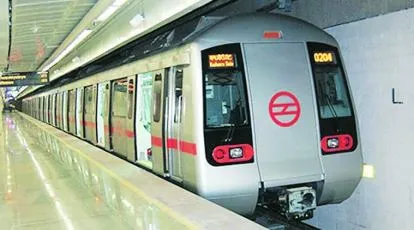
The metro network in the capital, Delhi, is no longer just a means of transportation, but has become the city’s lifeline. With each new phase, the metro is adding new dimensions to both speed and connectivity. In this regard, the Delhi Metro Rail Corporation (DMRC) has taken another major step.
Add rightsofemployees.com as a Preferred Source


Metro travel in the capital Delhi is about to enter a new phase. Carrying millions of passengers daily, the Delhi Metro is no longer just a means of transportation, but also a solution to the city’s traffic and pollution problems. The Delhi Metro Rail Corporation (DMRC) has taken a major step in this direction. Following the approval of Metro Phase 5A, the Central Secretariat Metro Station will be developed as the capital’s most important triple interchange metro hub. This will not only improve passenger connectivity but is also expected to reduce traffic pressure in Central Delhi.
Central Secretariat to become a super interchange
Currently, the Central Secretariat Metro Station serves as an interchange between the Yellow Line and the Violet Line. Approximately 200,000 passengers travel daily, while approximately 60,000 employees working in nearby ministries and government offices also rely on this station. Now, with the expansion of the Magenta Line under Phase 5A, this station will become a triple interchange.
Magenta Line to be extended
According to the DMRC, the Central Vista Corridor from RK Ashram to Indraprastha in Phase 5A has been approved. As part of this, the Magenta Line will be extended. Currently, Magenta Line passengers have to change metro lines to reach the Central Secretariat. However, after the extension, Magenta Line trains will also stop directly at this station. This will save passengers time and make travel more convenient.
Dependence on private vehicles will be reduced
The DMRC says interchange stations are built in strategic areas to encourage people to prefer public transport over private vehicles. A large number of government offices are located around the Central Secretariat, where thousands of people commute daily by car and two-wheelers. The addition of the Magenta Line will further strengthen metro access, potentially reducing private vehicle use and pollution.
The number of interchange stations will increase.
According to the DMRC, several new triple interchange stations will also be introduced under Metro Phase 4. Currently, there are 29 interchange stations in the Delhi Metro network. This number will increase to 43 upon completion of Phase 4, while the total number of interchange stations will increase to 46 with Phase 5A.
Add rightsofemployees.com as a Preferred Source