
El Niño Arrives: Disrupted Monsoons to Trigger Heat and Drought Cycle Across India
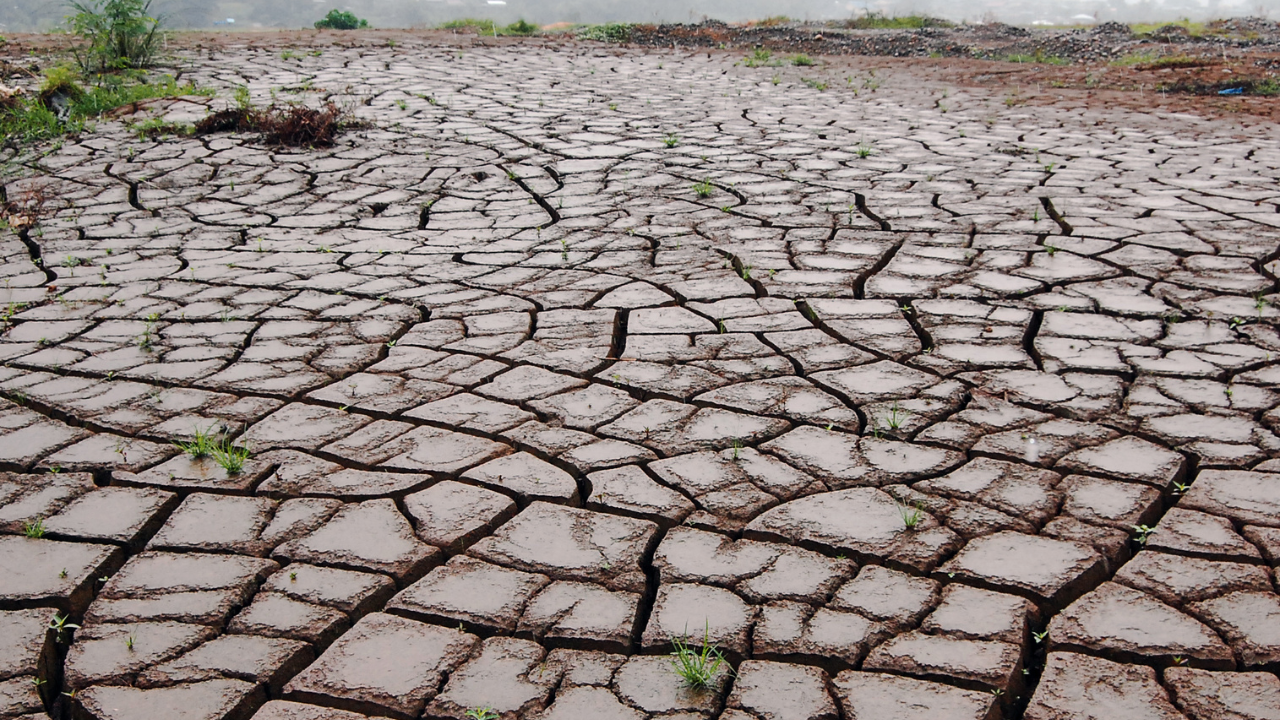
India’s agricultural and economic clock is facing structural disruptions as meteorologists confirm the onset of El Niño. The phenomenon is destabilizing the traditional Southwest monsoon, replacing steady, nourishing rainfall with a volatile cycle of prolonged dry spells and erratic, violent downpours. With critical ocean shields remaining neutral, the country faces a dual threat of localized droughts and flash floods, directly endangering summer crops and food inflation trajectories.
Add rightsofemployees.com as a Preferred Source




The Core Science: Shift in the Pacific
El Niño represents the warm phase of the El Niño Southern Oscillation (ENSO) cycle. Under standard atmospheric conditions, steady equatorial trade winds push warm surface waters westward toward Asia. During an El Niño event, these trade winds weaken considerably, allowing the pool of warm water to slide backward toward the central and eastern Pacific Ocean.
This eastward displacement shifts the massive atmospheric convective band—the engine responsible for rising, rain-making air—completely away from the Indian subcontinent. Data from the critical Niño 3.4 ocean region indicates that sea surface temperature anomalies have already breached El Niño thresholds. Furthermore, the World Meteorological Organization (WMO) has pegged the probability of this climate pattern firmly taking hold at 80% by August and 90% heading into September.
Why India Has No Meteorological Shield This Year
Historically, a severe El Niño does not automatically guarantee a failed monsoon. India possesses a secondary localized climate buffer known as the Indian Ocean Dipole (IOD)—often described as a temperature tug-of-war between the western and eastern sectors of the Indian Ocean.
-
The Positive IOD Shield: A strongly positive IOD pulls moisture back toward East Africa and the Indian subcontinent, effectively acting as a counterweight. This phenomenon famously saved India from a historic, catastrophic El Niño in 1997.
-
The Current Reality: Meteorological assessments indicate that the Indian Ocean Dipole is flat and entirely neutral. With no active counterweight to neutralize the Pacific anomalies, El Niño has an unhindered path to alter Indian weather systems.
Systemic Risks: Agriculture, Power, and Water
The monsoon accounts for roughly 70% of India’s annual precipitation. Because more than half of the country’s total arable farmland lacks artificial irrigation infrastructure, millions of smallholders rely entirely on seasonal rainfall to sustain the Kharif (summer) crop cycle.
The India Meteorological Department (IMD) has issued a sobering outlook for the season:
| Meteorological Metric | Current Forecast & Impact |
| Total Rainfall Forecast | Below-normal, projected at 90% of the Long Period Average (LPA) |
| Deficient Season Probability | 60% chance of a structurally deficient monsoon season |
| Precipitation Pattern | Staccato delivery: Long dry stretches punctuated by sudden, severe downpours |
| Compounding Structural Risks | Surging peak-load power grid demands, dropping reservoir levels, and food price inflation |
The atmospheric physics behind this cycle are driven by thermodynamic stress. As cloud cover diminishes, the exposed landmass bakes, accelerating drought conditions. Concurrently, warmer air possesses a higher water-holding capacity. When the atmosphere finally cools enough to release this moisture, it discharges all at once in intense, localized cloudbursts over areas like Central India. Instead of recharging groundwater tables and nourishing crops, these sudden deluges cause immediate topsoil erosion and flash flooding, exacerbating the agricultural crisis.

Recent Posts
- ITR Filing 2026: Filing returns not only saves taxes, but also provides these 5 major benefits
- Storm wreaks havoc at Delhi Airport, 3 Air India planes damaged due to collision with ground equipment
- Poster war intensifies ahead of India alliance meeting in Delhi, opposition parties target Rahul Gandhi
- E85 Fuel Launches in India at ₹82.12: Can Your Car Run It?
- Annamalai Quits BJP: 14 Lakh Join ‘We The Leaders’ Movement
Add rightsofemployees.com as a Preferred Source