Global Policy: United Kingdom to Implement Blanket Social Media Ban for Under-16s
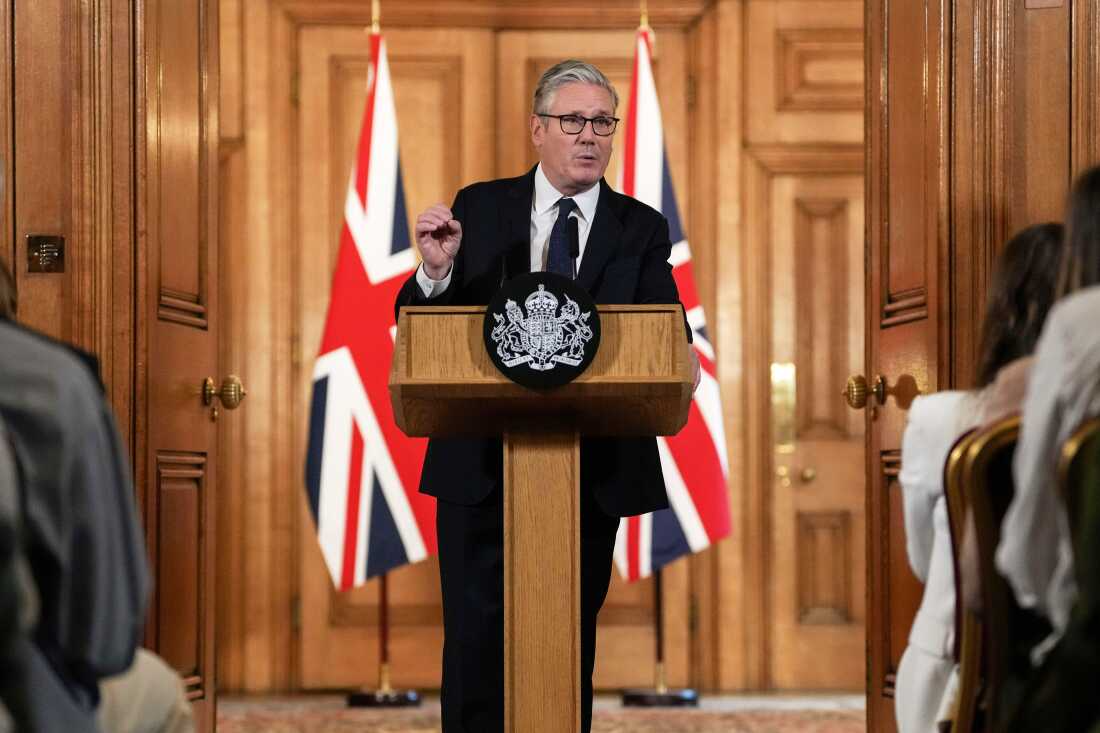
In a major regulatory shift, British Prime Minister Keir Starmer has announced that the UK government will introduce a complete ban on social media access for all children under the age of 16. Speaking at a Downing Street press conference, Starmer framed the impending legislation as a necessary intervention to protect children’s mental health and safety from the unchecked power of major technology conglomerates.
Add rightsofemployees.com as a Preferred Source




The decision marks a significant escalation in Britain’s regulatory approach to Silicon Valley, moving past algorithmic restrictions and age-verification mandates toward a hard statutory block.
The Policy Framework and Strategic Drivers
The proposed UK ban is heavily modeled after recent international precedents, specifically drawing from legislative frameworks implemented in the Southern Hemisphere.
-
The Australian Blueprint: The UK policy follows Australia’s landmark December 2025 legislation, which became the world’s first absolute social media ban for under-16s—cutting off access to heavily populated platforms including TikTok, YouTube, Instagram, and Facebook.
-
Addressing Addictive Architecture: In addition to age limits, the government’s consultation reviewed severe operational restrictions. These include potential nocturnal curfews, strict daily app time limits, and legal curbs targeting “addictive design features” such as infinite scroll loops and push-notification algorithms.
Prime Minister Keir Starmer stated: “It is clear to me a full ban is the right choice. While it will not be easy, the government has agency in pushing back against the power of big technology companies… People rightly expect action.”
Public Sentiment and Consultation Data
The policy shift follows an extensive national consultation process that gathered more than 116,000 formal testimonies from parents, educators, legal experts, and tech industry stakeholders.
The data indicates massive domestic anxiety regarding early-age digital exposure:
[UK Consultation Response Metrics]
 │
 ├── 90% of responding parents support a strict minimum age threshold of 16.
 │
 └── 83% of responding parents state online risks significantly outweigh the benefits.
Implementation Challenges and Public Skepticism
Despite broad political and parental backing, the proposed absolute ban faces substantial technical, legal, and behavioral pushback:
1. Enforcement and Age Verification
Enforcing a hard cutoff requires highly robust digital verification methods. Tech companies will be forced to deploy stringent, privacy-compliant age verification technologies, a hurdle that has historically faced friction regarding data security and user privacy tracking.
2. Behavioral Countermeasures
Academic researchers and child psychologists have openly questioned the efficacy of a total ban. Experts warn that a blanket prohibition might simply push tech-savvy teenagers toward Virtual Private Networks (VPNs), alternative unmonitored networks, and underground platforms, making their online behavior harder to supervise.
3. The Digital Literacy Argument
Several youth advocacy groups and school cohorts argue that a complete ban deprives teenagers of essential digital spaces for socialization, collaborative learning, and community building. Opponents suggest that focusing on comprehensive digital literacy and platform accountability would yield better long-term results than forced isolation.

Recent Posts
- Akal Takht Declares Punjab CM Bhagwant Mann ‘Anti-Guru’ Over Video
- Gov’t Revises Salary, DA & Pension Accounting Rules for FY27-28
- UPSC Recruitment 2026: 400+ Vacancies Notified, Apply Before July 3
- 10 things, including LPG, CNG, and fertilizer, will become cheaper in India! The US-Iran war has stopped.
- Gold Price Today: Gold prices rise again, from Delhi to Chennai; check prices in major cities
Add rightsofemployees.com as a Preferred Source