

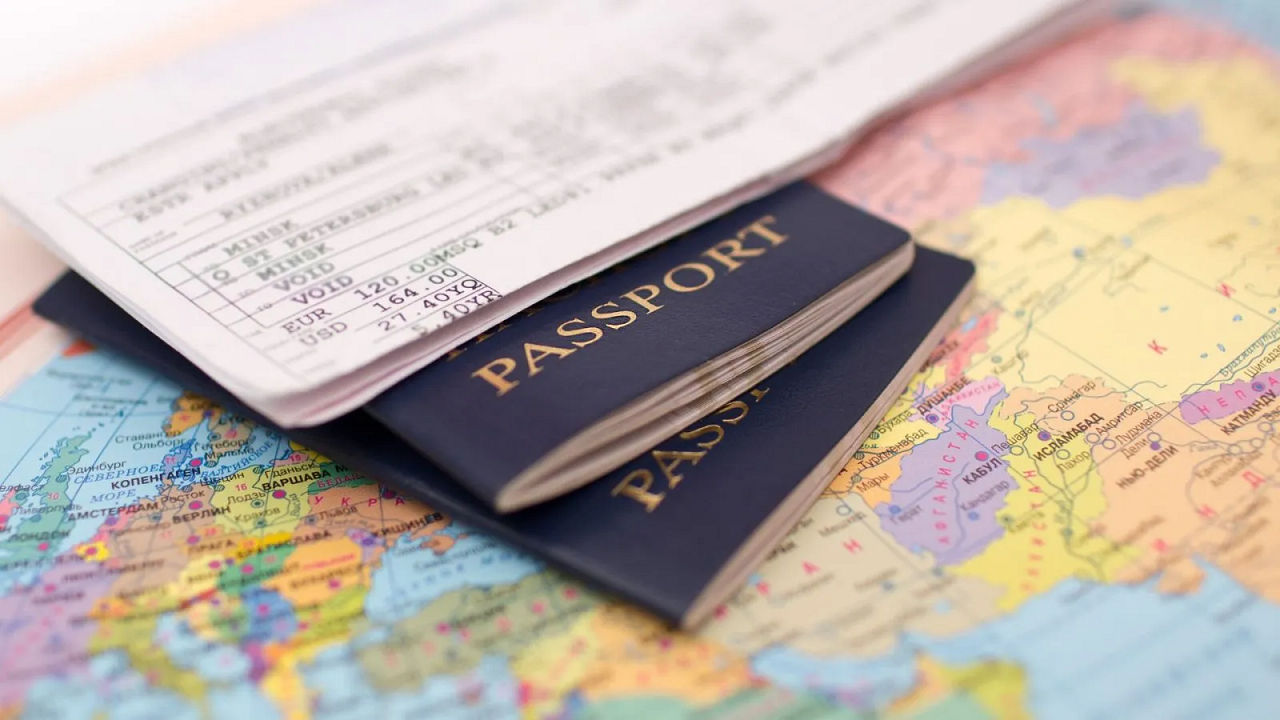
The Ministry’s statement on the 14th Passport Seva Divas sparks a national debate over what legal paperwork explicitly establishes Indian citizenship under current laws.
The Ministry of External Affairs (MEA) has triggered a widespread legal and civil debate following an official clarification regarding the statutory nature of travel documents. Speaking on the occasion of the 14th Passport Seva Divas, the MEA stated that while an Indian passport is issued strictly and exclusively to citizens of India, the booklet itself is fundamentally a travel document meant to facilitate international movement and does not, by its mere possession, constitute conclusive proof of a holder’s citizenship status.
Add rightsofemployees.com as a Preferred Source


The unexpected announcement has ignited intense discussion across social media platforms like X, as citizens and legal experts question what specific paperwork serves as undeniable proof of nationality in a regulatory environment filled with gray areas.
Recent Posts
- Do you have an account with the post office? Many important rules, including e-KYC, have changed.
- Silver Price Today: How much has silver become cheaper today? See the new price from 1 gram to 1 kilogram.
- Muharram Holiday 2026: When will Ashura be celebrated in India, know the holiday and its significance, in which states the holiday will be observed
- Padma Awards 2026 Complete Winners List: Mammootty, Alka Yagnik, and R Madhavan Honored by President Murmu
- Renting a House in India in 2026? 7 New Rules Every Tenant and Landlord Must Know
                         [The Statutory Realities of Key Indian Documents]
                                                 │
         ┌───────────────────────────────────────┼───────────────────────────────────────┐
         ▼                                       ▼                                       ▼
       [The Indian Passport]                 [The Voter ID Card]                      [Identity Document]
 • Function: Facilitates global travel.  • Function: Identifies residency and     • Function: Serves as an unverified
 • Ownership: Omitted from personal       enables voting rights.                  identity card.
   assets; belongs to the state.         • Status: Legally insufficient to prove  • Status: Confirmed by the Supreme
 • Status: Not standalone proof.          national citizenship.                    Court as non-citizenship proof.
The Legal Irony of Document Ownership and Alternate Credentials
The MEA’s clarification highlights a peculiar institutional irony: an individual must be a verified citizen to receive a passport, yet the final document cannot be presented as absolute proof of that same citizenship. Furthermore, according to the official terms printed on the back flap of every booklet, receiving a passport does not grant personal ownership. The document remains the absolute property of the Government of India and must be surrendered immediately if an official recall order is issued.
[Voter Registration Revision Review] ──► Supreme Court Addresses National Civil Verification Protocols
                                                      │
                                                      ▼
[Baseline Judicial Precedents Set]   ──► Confirms Identity Paperwork is Insufficient to Establish Citizenship
This structural distinction aligns with recent judicial observations. Earlier this year, during a high-profile Supreme Court hearing regarding the Special Intensive Revision of voter lists, the apex court affirmed that national identity documents are not conclusive proof of citizenship and are designed solely to verify individual identity. Similarly, a Voter ID card is not recognized as a citizenship document; its legal purpose is to verify an individual’s identity and local residence to allow them to vote in public elections.
Decoding Citizenship Benchmarks and Passport Infrastructure Progress
Under India’s existing legal frameworks, establishing citizenship by birth depends entirely on strict, chronological windows:
-
Born between Jan 26, 1950, and July 1, 1987: A person is automatically a citizen by birth if born in India during this period, regardless of parental nationality.
-
Born between July 1, 1987, and Dec 3, 2004: A person can claim citizenship if at least one parent was a certified Indian citizen at the time of their birth.
-
Born on or after December 3, 2004: A person qualifies only if both parents are Indian citizens, or if one parent is a citizen and the other is not an illegal immigrant when the child is born.
| Document Type Under Review | Primary Functional Intent | Current Legal Status Regarding Citizenship |
| Indian Passport | Facilitates international travel; remains sovereign state property. | Not standalone proof; issued only to citizens but cannot conclusively prove status. |
| Voter ID Card | Validates individual identity and localized area residency. | Insufficient; functions strictly as an authorization to cast a ballot. |
| National Identity Paperwork | General purpose identity validation. | Explicitly ruled out by the Supreme Court as a tool to establish citizenship. |
Alongside these policy discussions, the MEA shared key data highlighting major upgrades to India’s passport delivery network, including the successful rollout of chip-embedded e-Passports. In 2025 alone, the ministry processed 1.5 crore passport-related requests, with standalone passport issuances accounting for 1.39 crore of that total.
Officials noted that average processing times have dropped significantly. A standard passport is now delivered within six working days, excluding the time required for local police verification. Because of a massive six-fold increase in service locations—expanding from 77 hubs a decade ago to 545 active Passport Seva Kendras across the country today—citizens now spend an average of less than 45 minutes on-site during their appointments.
FAQ
Q1: If a passport or a Voter ID isn’t definitive proof, what documents actually establish Indian citizenship?
Under current citizenship laws, definitive proof depends heavily on your date of birth. For those born after July 1, 1987, official birth certificates combined with the citizenship documents or legacy birth proofs of one or both parents are typically required to establish a legal claim.
Q2: Can a non-citizen apply for or legally hold an Indian passport?
No. The Ministry of External Affairs explicitly maintains that an Indian passport is issued only to verified Indian citizens. The recent clarification simply highlights that the passport itself functions as a travel document rather than a final, standalone certificate of citizenship.
Q3: Who actually owns your passport once it is issued to you?
The passport remains the sole property of the Government of India. As noted on the back flap of the booklet, the holder is a custodian, and the document must be surrendered to authorities if the government officially orders its return.
Recent Posts
- Do you have an account with the post office? Many important rules, including e-KYC, have changed.
- Silver Price Today: How much has silver become cheaper today? See the new price from 1 gram to 1 kilogram.
- Muharram Holiday 2026: When will Ashura be celebrated in India, know the holiday and its significance, in which states the holiday will be observed
- Padma Awards 2026 Complete Winners List: Mammootty, Alka Yagnik, and R Madhavan Honored by President Murmu
- Renting a House in India in 2026? 7 New Rules Every Tenant and Landlord Must Know
Add rightsofemployees.com as a Preferred Source