

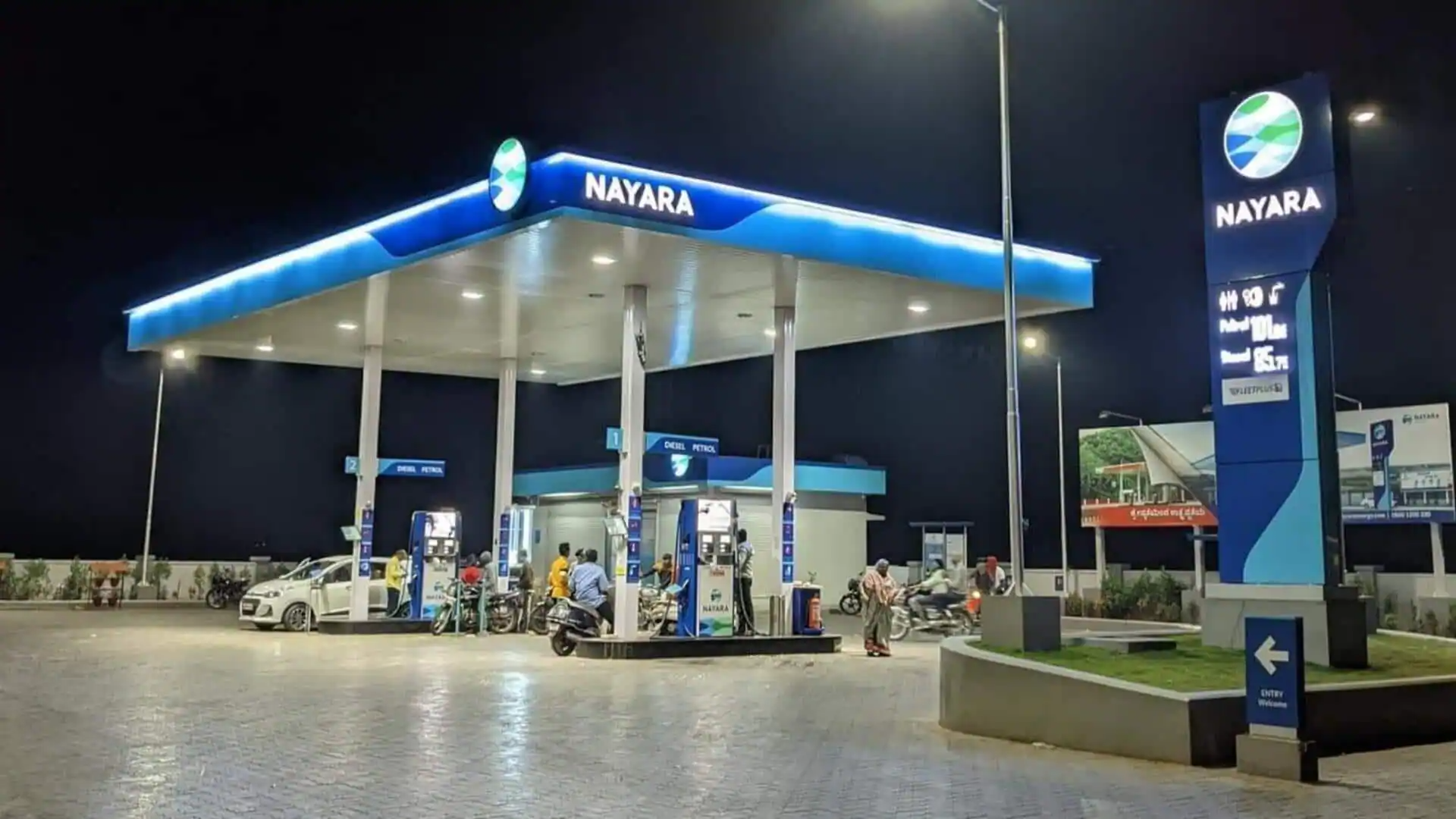
Nayara Energy Hikes Petrol Price by ₹5 Per Litre and Diesel by ₹3
Now the impact of the Middle East conflict is hitting Indian pockets this Thursday. Nayara Energy, India’s largest private fuel retailer, officially raised its fuel prices on March 26, 2026. Therefore, customers at nearly 7,000 pumps will pay ₹5 more for petrol and ₹3 more for diesel. In fact, this move passes on the rising global costs to the consumer for the first time in years. Simple as that.
Add rightsofemployees.com as a Preferred Source


━━━━━━━━━━━━━━━━━━━━━━━━━━━━━━━━━━
At a Glance: The March 2026 Fuel Hike
-
Petrol Increase: ₹5 Per Litre (Up to ₹5.30 in some states).
-
Diesel Increase: ₹3 Per Litre.
-
Trigger: Global oil surge following US-Israel-Iran conflict.
-
Retailer Type: Private (Nayara Energy / Rosneft-owned). ━━━━━━━━━━━━━━━━━━━━━━━━━━━━━━━━
Why Nayara Energy Raised Prices
Now the reason for this sudden hike is the massive surge in international oil prices. Specifically, global crude touched $119 per barrel earlier this month.
The Cost Burden First, international oil prices have jumped nearly 50% since February 28. Next, private retailers like Nayara do not receive government subsidies. Thus, they must absorb heavy losses when global rates stay high. Furthermore, state-run firms like IOC and BPCL have kept their prices frozen. Therefore, Nayara had little choice but to raise rates to keep their pumps running. Period.
Impact Across Different Indian States
Now the exact price you pay at the pump will depend on where you live. Actually, local taxes like VAT play a big role in the final bill.
Tax Variations First, the base hike is ₹5 for petrol and ₹3 for diesel. Next, states add their own local taxes on top of this base. Thus, in some regions, the petrol price hike is as high as ₹5.30 per litre. Also, bulk industrial diesel users saw an even bigger jump of ₹22 a litre last week. Consequently, businesses and transport fleets will feel the most financial pressure this month.
Private vs State-Owned Retailers
Now there is a growing gap between private pumps and government-owned outlets. In fact, this creates a unique situation for Indian drivers.
The Retail Landscape First, state-owned firms control about 90% of the fuel market. Next, these firms act as “good corporate citizens” by keeping prices stable for now. Thus, private players like Jio-bp are incurring heavy losses to stay competitive. Moving forward, Nayara is the first major private player to break the freeze. Overall, this helps the company offset the rising cost of importing 88% of India’s crude needs.
The Strait of Hormuz Crisis
Now the root cause of this energy crisis lies far away in the Middle East. Specifically, the blockage of a vital shipping route has choked oil supplies.
Supply Chain Issues First, most of India’s oil and gas comes through the Strait of Hormuz. Next, recent military strikes have made the area unsafe for tankers. Thus, insurers have withdrawn coverage for ships passing through the region. Furthermore, this has effectively halted many tanker movements to India. Therefore, the scarcity of supply is driving prices up at local petrol pumps.
Frequently Asked Questions
Q: Will Jio-bp also raise prices today? Now, Jio-bp has not announced a hike yet despite their losses. Thus, their rates remain lower than Nayara’s for the moment.
Q: Why are state-run pumps still cheaper? Actually, the government supports firms like IOC and HPCL to keep inflation low. Therefore, they can absorb losses that private firms cannot.
Q: Does this affect normal or premium petrol? Since the order covers both, you will see a hike across most grades. Thus, both standard and 95-Octane fuel will be more expensive.
Q: Is the government planning to lower taxes? Actually, there is no official word on a VAT or excise cut yet. Therefore, the current high prices are likely to stay for some time.
The Bottom Line
Now the Nayara Energy petrol price hike is a direct result of global instability in 2026. While most of the market remains frozen, private retailers are reaching their breaking point.
Overall, the move shows how vulnerable India’s fuel prices are to Middle East tensions. Therefore, drivers should keep an eye on prices at different pumps before filling up. Thus, you can save a few rupees by choosing state-run outlets while the freeze lasts. Meanwhile, the government continues to monitor the situation in the Strait of Hormuz.
Check the meter. Plan your drive. Period.
Recent Posts
- IPL 2026: BCCI Announces Phase 2 Schedule and Venues
- RCB Sold for $1.8 Billion: Aditya Birla & Blackstone Lead Consortium
- Amazon Spring Sale 2026: Best Smartwatch and Ring Deals
- New I-T Rules 2026: Foreign Income & Crypto Tax Changes
- India Lockdown Again Trend: Why PM Modi’s Speech Sparked 2026 Rumors
Add rightsofemployees.com as a Preferred Source