

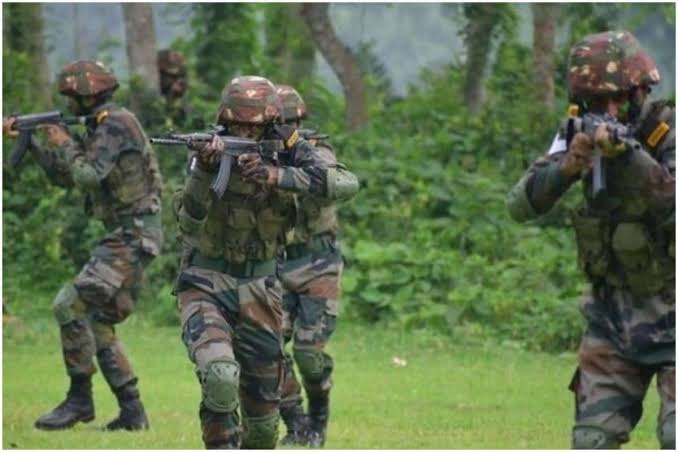
Driven by technical demands highlighted during recent border operations, the Navy is targeting up to 75% permanent retention, while the Army and Air Force seek a 50% threshold.
NEW DELHI — The Indian Armed Forces are actively finalizing plans to radically overhaul the permanent intake framework of the Agnipath recruitment scheme. As the maiden batches of Agniveers—who originally entered training facilities in early 2023—approach the end of their foundational four-year contracts later this year, military commanders are pushing to significantly raise the current 25% permanent absorption ceiling.
Add rightsofemployees.com as a Preferred Source


Under the new operational architecture being reviewed across branches, the service arms are seeking varied intake caps to match their unique technological demands:
-
The Indian Navy: Looking to execute the most aggressive policy shift by retaining up to 75 per cent of its specialized recruits.
-
The Indian Army & Air Force: Proposing to lift their permanent assimilation boundaries to approximately 50 per cent.
The proposal is currently slated for refined joint discussions between the service chiefs and the Department of Military Affairs (DMA) to synchronize personnel retention structures.
Recent Posts
- Growing Demand for E0/E10: Indian Motorists Signal Willingness to Pay Premium for Pure Petrol
- Row Over Ayodhya Ram Temple Funds Escalates as VHP and Congress Trade Charges
- RSS Condemns Ram Temple Donation Theft, Warns of Conspiracy
- Thailand Travel Guidelines 2026: Indian Embassy Releases 11-Point Checklist for Tourists
- 3 Days Instead of Weeks: Inside the EPFO’s Massive New Speed Reform for PF Withdrawals
Technical Complexity Driving the Policy Shift
The primary catalyst forcing a re-evaluation of the 2022 policy is the rapidly escalating technical baseline of modern front-line warfare. Top military strategists note that the initial four-year timeline is proving too brief for personnel to seamlessly master, deploy, and refine tactics around highly complex, modern weapon systems, automated sensor grids, and advanced electronics.
Proposed Agnipath Retention Adjustments (2026 Baseline)
├── Current Structural Cap: 25% Permanent Absorption across all arms
├── Navy Proposed Pipeline: 75% Retention (High dependency on maritime technology)
└── Army & IAF Proposed Pipeline: 50% Retention (Targeted toward tech & specialized units)
Valuable operational insights forcing this shift were collected during Operation Sindoor, the complex, multi-domain tri-service military campaign executed in May 2025 following cross-border provocations. While evaluations confirmed that Agniveers performed reliably during active operations, field analysis concluded that repeat field deployments and long-term operational experience are absolute prerequisites in high-intensity, high-technology conflict environments.
Furthermore, with regular veteran personnel steadily retiring out of active service annually, maintaining the original low 25% retention rate threatens to induce temporary localized manpower gaps before subsequent recruitment pipelines mature. The Indian Army is currently navigating an estimated workforce shortfall of roughly 1.8 lakh personnel, a deficit it plans to balance by progressively scaling future Agniveer recruitment intake sizes.
Special Units and Tailored Absorption Models
Even if the central administration mandates a slow, incremental transition for the overall universal retention cap, individual service arms are exploring a secondary strategy: heavily concentrating their retained personnel inside high-tech, specialized formations while regular units continue to hold a higher percentage of short-term four-year enlistees.
| Service Branch | Current Permanent Cap | Proposed Retention Target | Core Strategic Drivers | Special Implementations |
| Indian Navy | 25% | 75% | Specialized handling of complex warship electronics, radar systems, and fleet mechanics. | High-skill maritime technical cadres. |
| Indian Army | 25% | ~50% | Addressing a structural shortfall of 1.8 lakh personnel; preserving seasoned infantry expertise. | Integration into new high-tech Bhairav battalions. |
| Indian Air Force | 25% | ~50% | Maintaining seasoned crews for advanced avionics, indigenized air defense networks, and drone fleets. | Systems maintenance and advanced electronic warfare. |
A primary testing ground for this flexible model within the ground forces is the newly formed Bhairav Battalions. Unlike standard strategic Special Forces, these compact, agile 250-man tactical strike units are permanently stationed directly adjacent to highly sensitive border corridors. Built around the doctrine of rapid, immediate-response operations requiring mastery over advanced loitering munitions and automated surveillance tech, these specialized units demand a structurally higher baseline of seasoned, long-term personnel.
Prior iterations of the increased retention model had been submitted to the DMA for review and were subsequently returned to the respective service headquarters for deeper optimization. While the individual branches have not issued public confirmations regarding a final signed agreement, the impending conclusion of the first batch’s service contract later this year is accelerating official decision timelines.
Frequently Asked Questions (FAQs)
Why is the Indian Navy demanding the highest Agniveer retention percentage?
Naval operations are exceptionally hardware-heavy, demanding deep, long-term technical mastery over advanced maritime propulsion, sonar arrays, weapon delivery platforms, and onboard computerized infrastructure. A 75% retention rate ensures the Navy does not constantly lose highly trained technical technicians every four years.
What are the newly raised Bhairav Battalions mentioned in the plan?
Bhairav Battalions are compact, 250-soldier tactical strike units raised by the Indian Army under a “save and raise” doctrine. Positioned very close to sensitive borders, they act as a bridge between regular infantry and Para Special Forces, focusing on rapid, drone-integrated, high-impact tactical operations.
What happens to Agniveers who are not retained permanently?
Agniveers who exit the service after their four-year contract concludes receive a custom-compiled Seva Nidhi financial package, alongside formal skill certifications and targeted lateral placement quotas within various state police forces, central paramilitary units, and public sector industries to ease their return to the civilian workforce.
Recent Posts
- Growing Demand for E0/E10: Indian Motorists Signal Willingness to Pay Premium for Pure Petrol
- Row Over Ayodhya Ram Temple Funds Escalates as VHP and Congress Trade Charges
- RSS Condemns Ram Temple Donation Theft, Warns of Conspiracy
- Thailand Travel Guidelines 2026: Indian Embassy Releases 11-Point Checklist for Tourists
- 3 Days Instead of Weeks: Inside the EPFO’s Massive New Speed Reform for PF Withdrawals
Add rightsofemployees.com as a Preferred Source