

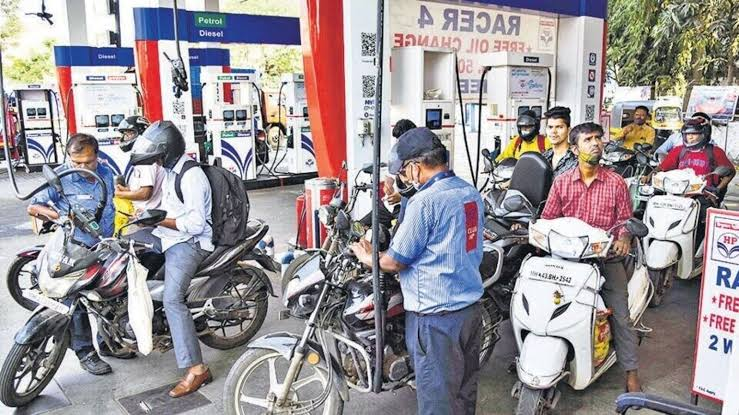
A nationwide LocalCircles study highlights steep mileage drops in pre-2023 models, prompting a growing public demand for alternative fuel choices at the pump.
NEW DELHI — A comprehensive nationwide survey has revealed deep-seated consumer dissatisfaction among Indian petrol vehicle owners regarding the government’s rapid deployment of E20 (20% ethanol-blended) petrol.
Add rightsofemployees.com as a Preferred Source


According to data compiled by community social platform LocalCircles, 53% of respondents rated the handling of the E20 rollout by the Ministry of Road Transport and Highways and the Ministry of Petroleum and Natural Gas as either “disastrous” or “ineffective.” Out of these critical responses, a striking 42% classified the execution explicitly as “disastrous,” while a small minority of just 13% viewed the policy execution positively.
E20 Rollout Public Sentiment Baseline
├── Dissatisfied: 53% (42% Disastrous | 11% Ineffective)
├── Positive Rating: 13%
└── Neutral / Unresolved: 34%
The friction points center on vehicle compatibility. While the Centre mandated that all E20 petrol sold in India from April 1, 2026, must carry a premium minimum Research Octane Number (RON) of 95, millions of active vehicles on Indian roads were engineered for much lower ethanol thresholds.
Older Vehicles Bear the Brunt of Efficiency Drops
The core issue rests with vehicles manufactured prior to the recent string of eco-compliance mandates. Vehicles built before April 2023 were calibrated strictly for E10 blends, whereas fully optimized E20-compliant engines only became standard manufacturing practice around April 2025.
| Vehicle Manufacturing Era | Primary Engineering Alignment | Documented E20 Performance Impacts | Consumer Preferences |
| Pre-April 2023 | Calibrated for E10 or lower blends. | 66% report a greater than 10% drop in mileage; 45% report heightened component wear. | 31% explicitly prefer buying premium E0/E10 fuel. |
| April 2023 – April 2025 | Transitional, partial component reinforcement. | Moderate efficiency degradation; variable fuel filter clogging risks. | Open to blended fuels if performance stabilized. |
| Post-April 2025 | Fully factory-optimized for E20 infrastructure. | Negligible structural damage; minor caloric value mileage differences. | Highly accepting of standard retail E20 fuel. |
The financial impact on users with older vehicles is dual-fold: a heavy decrease in fuel economy combined with escalating mechanical maintenance. The report highlights that modifying an older vehicle to handle higher ethanol saturation requires replacing highly vulnerable, non-compatible fuel pumps, rubber hoses, and gaskets—adding substantial unexpected costs to vehicle ownership.
Growing Demand for Consumer Fuel Options
The findings do not indicate a total rejection of green energy goals, but rather an urgent plea for commercial choice. Close to 31% of pre-2023 vehicle owners stated they would actively choose to buy pure petrol (E0) or lower-blended E10 varieties, even if those fuel types were sold at a premium price over standard E20.
“Older petrol vehicles remain at the absolute center of this economic debate. The data shows that consumers are searching for fuel flexibility at the station to preserve their engines, rather than a single, blanket mandate.”
— Extract from the LocalCircles Analysis
The public pushback emerges right as the Centre continues to firmly defend its aggressive biofuels strategy. In a July 2026 brief presented to the Supreme Court of India against active legal challenges, the government reiterated that ethanol blending is vital for national energy security—slashing dependence on foreign crude imports, lowering vehicular tailpipe emissions, and providing stable alternative income streams for domestic sugar cane farmers. The government noted that the long-term system impacts of the policy will yield clearer conclusive metrics by 2027.
Survey Methodology Overview
The LocalCircles quantitative study collected responses from 22,567 verified petrol vehicle owners spanning 316 urban and rural districts across India.
-
Demographic Split: 69% of the participants identified as male, and 31% identified as female.
-
Geographic Representation: Tier-1 metropolitan districts made up 46% of the data pool, Tier-2 cities accounted for 32%, and the remaining 22% of responses were drawn from Tier-3, Tier-4, Tier-5, and agricultural rural zones.
Frequently Asked Questions (FAQs)
Why exactly does E20 fuel cause lower mileage in older vehicles?
Ethanol contains roughly one-third less energy density than pure fossil gasoline. When engines designed for E10 or pure petrol run on a 20% ethanol mix, they must burn more fuel to generate equivalent combustion power, causing a noticeable drop in overall fuel economy.
Is the Indian government looking to push beyond E20 blends?
Yes. The Bureau of Indian Standards (BIS) has already officially notified structural fuel specifications for E22 up to E30 blends. However, the Union government’s immediate commercial focus remains centered on stabilizing the nationwide E20 integration before scaling higher.
How can I verify if my current car is fully compatible with E20 petrol?
As a general rule of thumb, vehicles built after April 2025 are systematically optimized for E20. If your car was manufactured before April 2023, its fuel system delivery lines likely contain components sensitive to long-term ethanol corrosion. Check your owner’s manual or look for a compliance sticker behind your fuel filler flap.
Add rightsofemployees.com as a Preferred Source